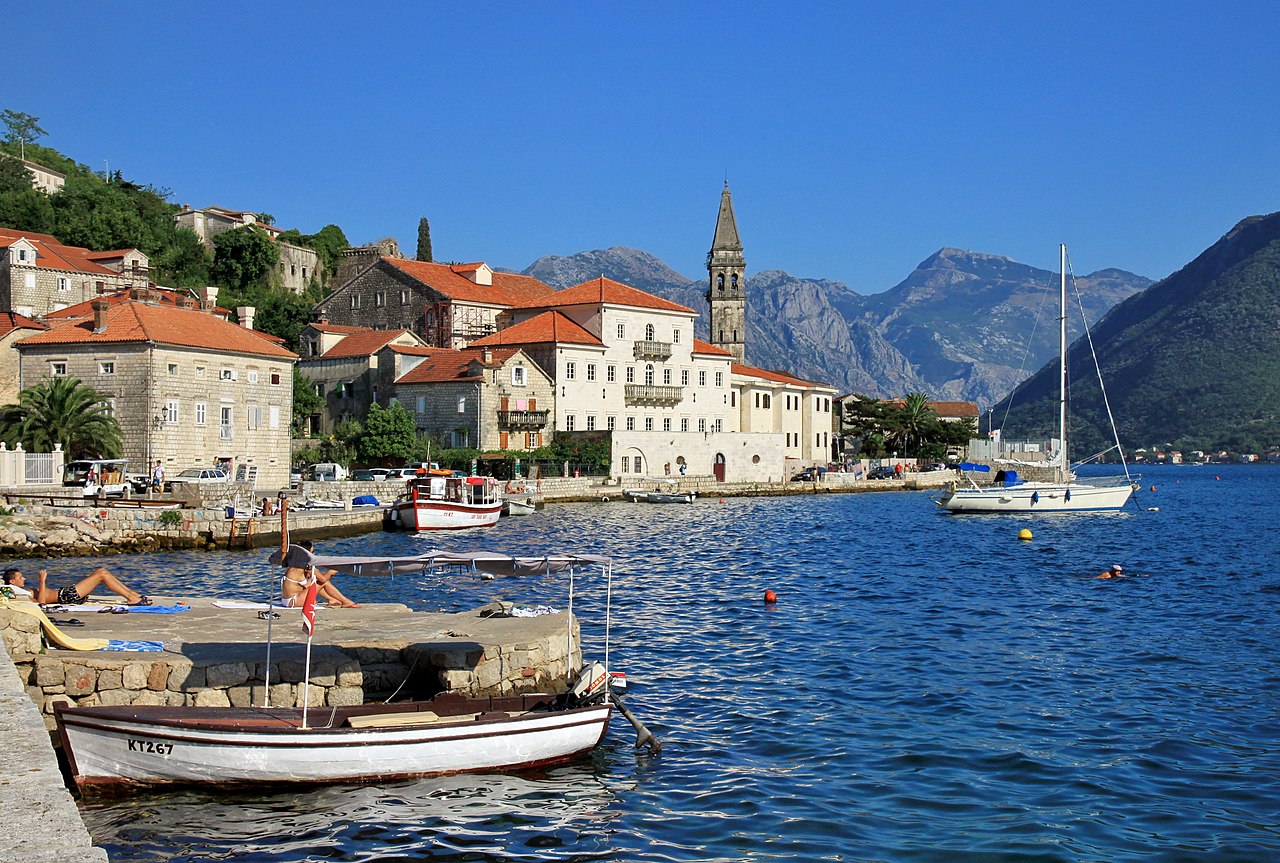

Montenegro — Crna Gora, "Black Mountain", in the local language — became independent in 2006 and is one of Europe's smallest countries, with only around 600,000 people. Most visitors only see its coast, and it's easy to understand why: the Bay of Kotor and the Budva Riviera are spectacular.
But Montenegro's real surprise is how much fits inside it. From the beach you can be in alpine meadows in two or three hours, standing on the edge of one of Europe's deepest canyons or rowing across a lake full of pelicans. This guide covers the places worth the detour, how and when to see them, and the practical rules every visitor should know.
When to visit Montenegro
| Season | Coast | Mountains |
|---|---|---|
| April–May | Warm, green and quiet; sea still cool for most people. | Snow lingers on high peaks; Tara rafting at its wildest. |
| June | Hot, sunny, sea warming up; busy but not packed. | Mountain roads open; great hiking weather. |
| July–August | Very hot and crowded, especially around Budva and Kotor. | Ideal: pleasant days, cool nights. |
| September | Warm sea, fewer people, lower prices — the best month. | Clear skies and the first autumn colours. |
| October–March | Mild but rainy; many beach businesses closed. | Snow from December; skiing at Žabljak and Kolašin. |
The ideal plan in July and August is to mix both: a few days on the coast, then escape the heat in Durmitor, where nights are cool even in midsummer.
The Bay of Kotor
The Bay of Kotor (Boka Kotorska) is a winding, fjord-like inlet surrounded by steep limestone mountains. Its shores are lined with medieval and baroque towns built by sailors and merchants who grew rich under Venetian rule.
1. Kotor, without the crowds
Kotor's walled old town is a UNESCO World Heritage Site and one of the most beautiful in the Mediterranean, a maze of marble lanes, churches and small squares. It's also a major cruise port, and on busy days thousands of passengers arrive at once, filling the narrow streets between mid-morning and late afternoon.
- Check the port's cruise schedule online and plan your visit for a day with no ships — or few.
- Explore early in the morning and in the evening, and spend the middle of the day on a boat or at a beach.
- Climb the walls to the Fortress of San Giovanni at sunrise or late afternoon: around 1,350 steps, with the famous view over the bay at the top. Bring water and wear proper shoes.
- Look out for Kotor's cats — the town has adopted them as an unofficial symbol, and even has a small cat museum.
2. Perast and the man-made island
Twenty minutes from Kotor, Perast is a tiny baroque town of stone palaces and church towers, built when it was home to some of the Adriatic's most skilled sea captains. Boats take you to Our Lady of the Rocks, an islet built over centuries by sailors dropping stones and sinking old ships around a reef. Inside the church, hundreds of silver votive plaques were left by sailors giving thanks for surviving storms.
The tradition lives on: every year on 22 July, locals row out at sunset to throw more stones in a ceremony called the Fašinada. Next to it, the natural islet of St George holds a small Benedictine monastery.
3. The ferry across the bay
A small car ferry crosses the narrowest point of the bay, between Kamenari and Lepetane, in a few minutes. It's a shortcut that saves driving all the way around the bay — useful if you're coming from Herceg Novi or Croatia towards Tivat and Budva — and offers great views from the water. In summer, expect queues at peak times.
4. The quieter side of the bay
Most visitors stick to Kotor and Perast, but the rest of the bay is worth exploring. Herceg Novi, near the entrance, is a hilly town of stairways, gardens and fortresses. Dobrota and Prčanj have elegant captains' houses and swimming spots along the shore. The Luštica peninsula, between the bay and the open sea, hides small coves reachable by boat.
Mountains, canyons and monasteries
5. Ostrog Monastery
Built into a vertical cliff face in the 17th century, Ostrog is Montenegro's most important pilgrimage site and one of the most striking buildings in the Balkans. Pilgrims of several faiths come to pray at the relics of St Basil of Ostrog. It's about an hour from Podgorica.
Dress modestly (shoulders and knees covered; women may be asked to cover their legs, and wraps are often available), keep your voice down and expect queues of pilgrims at weekends and on religious holidays. The final stretch of road is narrow and winding; many people park at the lower monastery and walk up.


6. Durmitor National Park and the Black Lake
Durmitor, another UNESCO site, is Montenegro's mountain playground: limestone peaks, glacial lakes, pine forests and high meadows dotted with shepherds' huts. The small town of Žabljak is the base, with guesthouses, restaurants and a supermarket.
From Žabljak, an easy loop walk of about an hour circles the Black Lake (Crno jezero) beneath pine forest and the peak of Međed. Experienced hikers can climb Bobotov Kuk, the highest summit in the park, on a long day hike. The Durmitor Ring is a scenic driving loop over high mountain passes, best done on a clear day. Summer is short at this altitude, and nights are cool even in August — pack a warm layer and rain gear.


7. Rafting the Tara Canyon
The Tara River Canyon is around 1,300 metres deep at its deepest point and is often described as the deepest canyon in Europe. The river's water is so clean that locals drink it straight from the source.
Rafting trips run from late spring to early autumn. The wildest water comes in May and June after the snowmelt; in late summer the river is calmer and better for beginners and families. Most trips include transport, equipment and lunch. Choose an operator with proper safety gear, helmets and certified guides, and read recent reviews before booking.
8. The Đurđevića Tara Bridge
Completed in 1940, this concrete arch bridge spans the canyon high above the river and was one of the largest of its kind in Europe when it was built. During the Second World War, the engineer who designed it helped Partisan forces blow up one of its arches to stop the advancing enemy. It's now one of Montenegro's most photographed landmarks, and several zip lines run alongside it if you want an adrenaline rush.


9. Lovćen, Njeguši and Cetinje
Above Kotor, a famously twisting road with around 25 hairpin bends climbs to Lovćen National Park, with ever-better views back over the bay. At the top, the mausoleum of Petar II Petrović-Njegoš — prince-bishop, ruler and Montenegro's greatest poet — sits on a summit with views over much of the country on a clear day.
On the way, stop in the village of Njeguši, birthplace of the royal Petrović dynasty, to taste its famous smoked ham and cheese. Continue to Cetinje, the old royal capital, a small, leafy town of museums, former embassies and the Cetinje Monastery. Together they make an excellent day trip from Kotor or Budva.
10. Lake Skadar
Shared with Albania, Lake Skadar is the largest lake in the Balkans and a national park full of water lilies, island monasteries and birdlife — including the rare Dalmatian pelican, the park's symbol. Take a boat trip from the village of Virpazar through the reed channels, swim from a quiet bay and finish with a tasting at one of the family wineries in the surrounding hills, where the local Vranac and Kratošija grapes are grown.
11. The Bar–Belgrade railway
One of Europe's most spectacular train lines runs from the coast at Bar up through the mountains towards Serbia, crossing deep gorges on viaducts and passing through more than 250 tunnels along its full length. The Mala Rijeka viaduct, near Podgorica, is one of the highest railway bridges in Europe. Even a short section — for example Podgorica to Kolašin — makes a memorable and very cheap day trip.
Where to stay in Montenegro
- Kotor: best for history and the bay. Stay just outside the walls (Dobrota or Muo) for quieter, cheaper rooms.
- Perast: romantic and quiet in the evenings, with few restaurants. Ideal for couples.
- Budva: best for nightlife and beaches, but busy and noisy in summer.
- Petrovac: a relaxed beach town that suits families.
- Ulcinj: sandy beaches, Albanian-influenced culture and lower prices.
- Žabljak: the base for Durmitor, hiking and rafting.
- Virpazar: small and peaceful, perfect for Lake Skadar.
A 5-day coast and mountains loop
- Day 1 — Kotor and Perast: old town in the morning, boat to Our Lady of the Rocks in the afternoon.
- Day 2 — Lovćen, Njeguši and Cetinje: climb the serpentine road, then continue to Cetinje. Sleep in Budva.
- Day 3 — Budva Riviera: Mogren, Sveti Stefan and Petrovac.
- Day 4 — Ostrog and Durmitor: drive inland via Ostrog to Žabljak and walk around the Black Lake.
- Day 5 — Tara Canyon: raft the Tara or visit the bridge, then return to the coast via Kolašin or stop at Lake Skadar.
Practical tips
12. Rules worth knowing
- Currency: Montenegro uses the euro, although it isn't in the EU. EU "roam like at home" mobile rules don't automatically apply, so check your plan or buy a local SIM or eSIM.
- Registration and tourist tax: visitors must be registered at their accommodation and pay a small nightly tourist tax. Hotels and licensed apartments handle it for you; if you stay in a private room, ask your host.
- Driving: dipped headlights are required at all times. Mountain roads are narrow, with tunnels and blind bends, so allow more time than your map app suggests.
- Language: Montenegrin is written in both Latin and Cyrillic letters, and you'll see both on signs. English is widely spoken in tourist areas.
- Safety: Montenegro is generally considered safe for travellers. The main risks are traffic on mountain roads and pickpocketing in crowded old towns.
Useful phrases
| English | Montenegrin |
|---|---|
| Hello / Good day | Zdravo / Dobar dan |
| Thank you | Hvala |
| Please / You're welcome | Molim |
| Yes / No | Da / Ne |
| How much is it? | Koliko košta? |
| Cheers! | Živjeli! |
| Goodbye | Doviđenja |
What to eat and drink
Montenegrin food changes with the landscape: Mediterranean seafood and olive oil on the coast, hearty meat, cheese and cornmeal dishes in the mountains.
- Njeguški pršut — smoked, air-dried ham from the village of Njeguši, served with local cheese and olives.
- Kačamak — a rich mountain dish of cornmeal or potato with cheese and kaymak, perfect after a hike.
- Black risotto — made with cuttlefish ink, a coastal favourite.
- Grilled fish and mussels from the Bay of Kotor, often with Swiss chard and potatoes.
- Lamb cooked "under the bell" (ispod sača) — slow-cooked under a metal lid covered with embers. Order in advance.
- Vranac — Montenegro's signature red grape, best tasted around Lake Skadar.
Montenegro FAQ
How many days do you need in Montenegro?
Three or four days are enough for the Bay of Kotor and the Budva Riviera. With a week you can add Durmitor, the Tara Canyon and Lake Skadar without rushing.
Is Montenegro expensive?
It's cheaper than Croatia but more expensive than Albania. Costs are highest in Kotor, Budva and Sveti Stefan in July and August; inland and in the shoulder season, prices drop noticeably.
Can I visit Montenegro without a car?
Yes, for the coast: frequent buses link Herceg Novi, Kotor, Budva, Petrovac, Bar and Ulcinj. For Durmitor, Ostrog and the Tara Canyon, a car or an organised day trip is much easier.
Is the tap water safe to drink?
In many towns it is, but quality varies, especially on the coast in summer. Ask your host locally, or stick to bottled or filtered water if in doubt.